


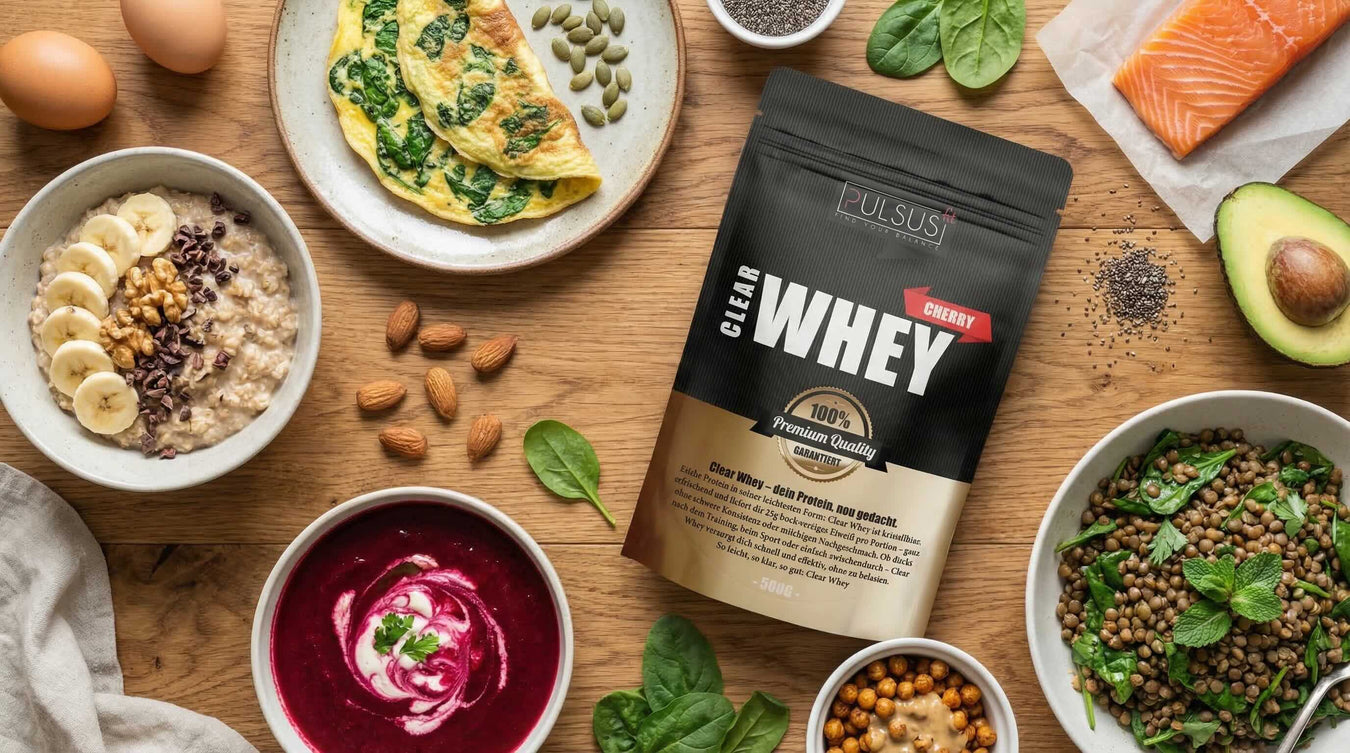
Your body is not a clockwork mechanism that functions the same way every day. It goes through phases, changes, sometimes needs more warmth, sometimes more energy, sometimes more rest. And this is precisely where cycle nutrition comes in: not as a strict diet, but as a conscious way to support your body through its natural rhythms.
Many women train hard, pay attention to their macros, and yet wonder why they feel invincible in some weeks and can barely get through the warm-up in others. The answer often lies not in the training plan – but in the cycle.
In this post, we will show you what happens in each phase of your cycle, what nutrients your body needs when, and why protein plays a role that many underestimate.
What is cycle nutrition – and why is it worth it?
Your cycle consists of four phases, each with different hormonal focuses. Estrogen, progesterone, FSH, LH – all these hormones influence not only your fertility but also your energy, mood, skin, and performance in training.
Cycle nutrition means knowing these phases and specifically adjusting your nutrient intake accordingly. No perfectionism, no rigid rules – but a better understanding of your body's signals.
The result: less PMS, more stable energy, better training results, and a body feeling that simply feels more harmonious.
The four phases at a glance
Phase 1: Menstruation – Regeneration & Warmth (Days 1–5)
Your body is regenerating. Blood loss takes its toll, and now the focus is primarily on iron, magnesium, and anti-inflammatory nutrients.
What your body needs now:
Iron is particularly important in this phase to compensate for blood loss and maintain your energy levels. In combination with vitamin C, absorption is significantly improved. Magnesium relaxes muscles and nerves, which can relieve cramps. Omega-3 fatty acids have an anti-inflammatory effect and support uterine relaxation.
Good sources: Kale, lentils, millet, beetroot, salmon, chia seeds, almonds, cocoa, avocado, and spinach.
Meal inspiration: A warming beetroot soup with ginger and a splash of lemon. Or millet porridge with cocoa, almonds, and berries. Your body wants warmth and minerals now – give them to it.
Phase 2: Follicular Phase - Energy Building & Cell Renewal (Days 6–13)
After menstruation, your body kicks into gear. Cells renew, the liver is activated, skin and hair benefit from targeted nutrient intake. You feel your energy returning – and your training suddenly feels easier again.
What your body needs now:
B vitamins and folic acid are essential for cell division and increasing energy levels. Vitamin E and zinc provide antioxidant protection and support hormone balance. Fiber helps the liver detoxify and keeps blood sugar stable.
Good sources: Spinach, broccoli, eggs, oats, avocado, nuts, pumpkin seeds, flaxseeds, and berries.
Meal inspiration: A spinach omelet with pumpkin seeds and whole-grain bread or an oat smoothie with berries, flaxseeds, and a spoonful of nut butter. Now is the time to go full throttle in training – and provide your body with the fuel for it.
Phase 3: Ovulation Phase - Liver Balance & Radiance (Days 14–16)
Estrogen levels peak, ovulation is imminent. You feel energetic, self-confident, and powerful. Your liver is now working at full capacity to break down excess estrogen – and needs the right support for this.
What your body needs now:
Cruciferous vegetables with their valuable indoles and sulforaphane support estrogen breakdown in the liver. Folic acid and B vitamins provide energy and cell protection. Zinc and selenium strengthen fertility and have an antioxidant effect.
Good sources: Brussels sprouts, cauliflower, broccoli, kohlrabi, spinach, chard, lentils, pumpkin seeds, Brazil nuts, and salmon.
Meal inspiration: A green smoothie with banana, spinach, and avocado or a lentil and spinach salad with fresh parsley. Your body radiates from within – support it.
Phase 4: Luteal Phase – Grounding & Hormone Stability (Days 17–28)
The longest and for many the most challenging phase. Progesterone rises, estrogen falls. Mood swings, cravings, and water retention can occur. This is where the right nutrition makes the biggest difference.
What your body needs now:
Magnesium and vitamin B6 calm the nervous system and reduce PMS symptoms. Complex carbohydrates keep blood sugar stable and curb cravings. Omega-3 fatty acids have an anti-inflammatory effect. And particularly important in this phase: tryptophan and protein. Tryptophan is an amino acid and a precursor to serotonin – your feel-good hormone. Without sufficient protein, no tryptophan, without tryptophan, less serotonin, and you notice this in your mood.
Good sources: Sweet potatoes, quinoa, whole grain rice, oats, bananas, walnuts, salmon, eggs, and legumes.
Meal inspiration: A baked pumpkin with chickpeas and tahini or warm porridge with banana, walnuts, and a pinch of cinnamon. Your body wants grounding and stability – give it both.
The factor many overlook: Protein in the cycle
If you look closely at the four phases, you'll notice something: protein appears everywhere. Eggs in the follicular phase, salmon in the ovulatory phase, legumes in the luteal phase. And there are good reasons for this.
Protein provides the amino acids your body needs to produce hormones, renew cells, build muscle, and keep your nervous system stable. Especially in the luteal phase, when PMS strikes and mood fluctuates, adequate protein intake is crucial – because without the amino acid tryptophan, your body cannot produce serotonin.
For active women, it becomes even more relevant: those who train regularly need 1.6 to 2.2 grams of protein per kilogram of body weight. For a 65 kg person, that's around 105 to 145 grams of protein per day. And achieving that solely through diet – in addition to all the other nutrients important in each cycle phase – is a real challenge in everyday life.
When diet alone isn't enough
Let's be honest: between meal prep, phase-appropriate eating, training, and everyday life, there's little room for perfection. And this is precisely where clever supplementation can make all the difference.
Clear Whey Protein is light, refreshing, and feels more like lemonade than a heavy shake. With around 25 grams of protein per serving and virtually zero sugar and fat, it fits into every cycle phase without disrupting your diet plan. It's easy on the stomach – especially pleasant during the menstrual phase, when heavy meals are often not well received. And it helps you reach your protein goal without having to plan an extra meal.
Whether as a post-workout drink, a light afternoon snack, or as a supplement on days when you simply don't get enough – it's a tool that gives you flexibility. No more and no less.
Starting Cycle Nutrition: Three Tips for Everyday Life
Start with one phase: You don't have to change everything at once. Observe which phase you are in and try out the appropriate foods. The rest will come with time.
Keep basics in stock. Nuts, seeds, oats, frozen spinach, lentils, and eggs cover a large part of the important nutrients and can be used flexibly.
Listen to your body. Cycle nutrition is a compass, not a law. If you crave chocolate in the luteal phase, then eat chocolate – preferably with 80% cocoa and a handful of almonds. Your body often knows better than any chart what it needs.
The most important thought at the end
Your cycle is not a weakness. It is a system that tells you every month what your body needs – if you listen. Cycle nutrition gives you the tools for this. And adequate protein intake ensures that you are powerful, stable, and well-nourished in every phase.
If you want to give your body the best – phase-appropriate, uncomplicated, and without compromise – then start today.


